Urgency, Fear & Threat Framing
A calm message can be ignored. A message that says your account is frozen, your family is in danger, or the police are on their way? That triggers a reaction - and that is exactly the point.
The Two-Hour Window
Ananya was a school principal in Pune. On a Thursday afternoon, an SMS arrived from what appeared to be TRAI.
"Your mobile number will be permanently deactivated in 2 hours due to KYC non-compliance. Verify immediately: [link]"
She clicked. The page looked official. She entered her mobile number and Aadhaar details to "verify her identity."
Within 40 minutes, her number had been used to register for a fraudulent loan in her name. The KYC was never pending. The message was fabricated. The deadline was the attack.
What Is Actually Happening: Manufactured Pressure
Scammers cannot survive verification. So they eliminate the time required for it.
9 in 10
phishing victims who acted on an urgent message did so within the first 10 minutes - before verifying the sender.
The manufactured deadline does not need to be believable. It only needs to be shorter than the time required for rational evaluation.
Source: Proofpoint State of the Phish Report, 2025Deadlines Disable Checking
Messages with a deadline under 2 hours are 3x more likely to result in the victim acting without verifying the sender, compared to messages with no time pressure at all.
Rs 1,776 Crore Lost in 2024
Digital arrest scams - where callers impersonate police or CBI and keep victims on the line for hours - were the largest single category of cybercrime financial loss in India in 2024, with over 92,000 reported cases.
"Closing Today" Trap
42% of investment fraud victims cited a "closing today" or "limited slots remaining" message as the primary reason they did not verify the opportunity before investing.
$1 Billion Lost in a Single Year
In 2024, tech support fraud crossed $1 billion in reported consumer losses in the US for the first time — making it the top impersonation scam category reported to the FTC, driven almost entirely by fake pop-up alerts demanding an immediate call.
How Manufactured Urgency Collapses the Verification Window
Every scam message gives you a choice: act, or verify first. Verification takes minutes. A manufactured deadline makes those minutes feel impossible.
"Your account will be suspended in 2 hours." "You have 10 minutes before the case is filed." "This offer expires at midnight."
These deadlines are invented. No real bank, government agency, or court operates on a 2-hour response window. Real institutions send written notices with days or weeks to respond. The deadline exists for one reason: to force action before rational thinking catches up.
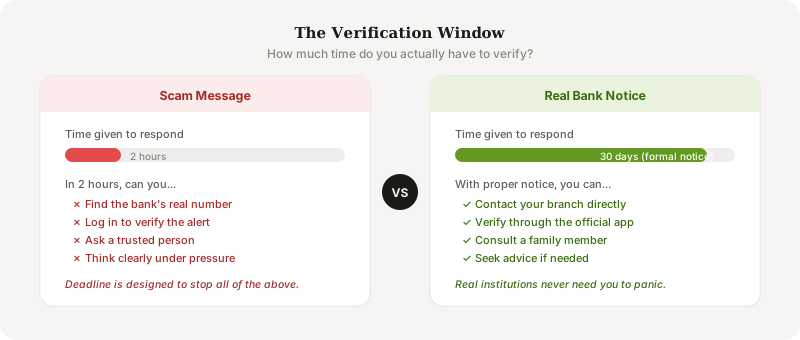
Fear-Based Manipulation: Account Suspension, Arrest, Legal Threats
Fear bypasses logic and goes straight to instinct. Scammers use three categories:
Financial fear: "Your SBI account has been flagged. Verify now or it will be permanently closed." Losing bank access feels catastrophic - and that feeling is the mechanism.
Freedom fear (digital arrest): "A non-bailable warrant has been issued in your name." The caller impersonates police or CBI, isolates the victim from family, and demands staged transfers. There is no such thing as a digital arrest under Indian law. No agency conducts arrests over a call.
Reputational fear: "We have evidence of illegal activity. Pay now or we notify your employer." The threat is always fabricated. No legitimate agency operates this way.
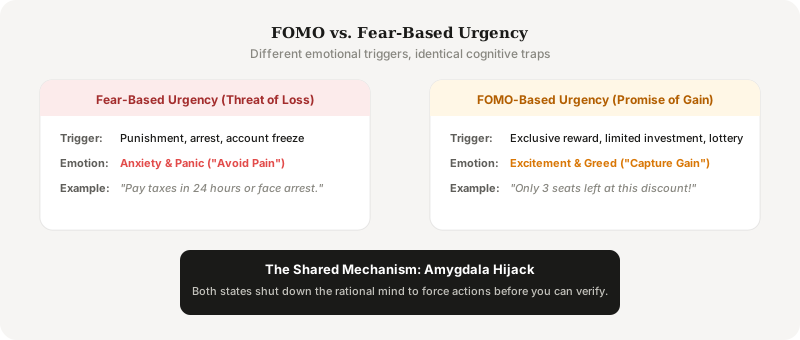
FOMO: Fear of Missing Out as a Manipulation Trigger
Urgency is not always about punishment. Sometimes it is about reward disappearing.
"Only 3 seats left at this price." "Your KBC prize of Rs 25 lakh expires in 48 hours." "This investment window closes tonight."
The mechanism is identical to fear - the brain perceives a closing window and shifts into reactive mode. A real opportunity does not disappear if you take 10 minutes to verify it. That single test exposes every FOMO trap.
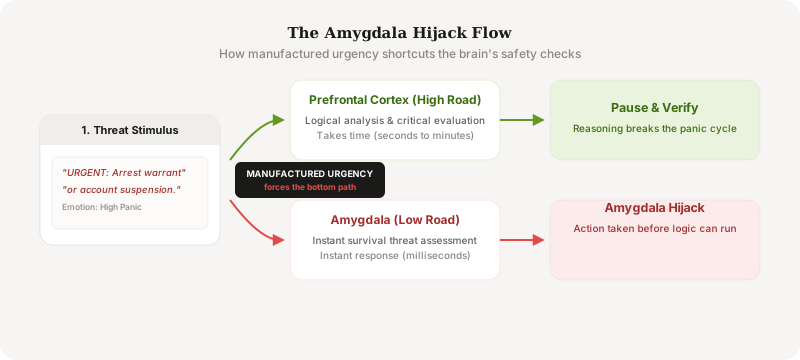
Amygdala Hijack: Why Fear Makes People Act Before Thinking
The amygdala processes emotional responses - especially fear. When it detects danger, it signals the body to react immediately, before the prefrontal cortex has time to evaluate what is actually happening.
Psychologist Daniel Goleman called this an "amygdala hijack" - the emotional brain overriding the thinking brain. The result is predictable: heart rate rises, attention narrows, the urge to act becomes overwhelming, and complex reasoning becomes difficult.
Scammers engineer this state deliberately. A message that triggers an amygdala hijack does not feel like a scam. It feels like a genuine emergency. This is not a failure of intelligence. It is the brain working exactly as designed - exploited by someone who studied that design.
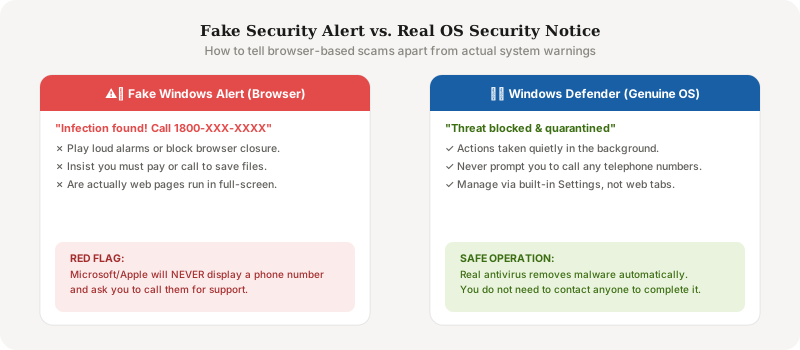
Tech Support Scams and Fake Device Warnings
A full-screen pop-up appears in the browser mimicking a Windows Defender or Apple Security alert. An alarm plays. The window cannot be easily closed.
"CRITICAL ALERT: Your device is infected. Call Microsoft Support immediately: 1800-XXX-XXXX. Do not close this window."
The pop-up is a webpage, not a system message. Real operating systems never display a phone number and ask you to call for virus removal. The number connects to a scam call centre that will ask for remote access, show you fabricated "evidence" of infection using normal system tools, and charge Rs 5,000-50,000 for fake removal software.
What to do: Force-close the browser. On Windows: Ctrl + Shift + Esc. On Mac: Cmd + Option + Esc. The pop-up disappears the moment the browser closes.
Try It: Beat the Clock
What That Just Showed You
1. The deadline is the weapon, not the threat. The account suspension, the arrest warrant, the expiring offer - none of these exist. The countdown is the attack. Remove the deadline and the scam has no leverage.
2. The link in the message is the trap. In every urgency scam, the message contains both the threat and the solution. That combination is the red flag. Real institutions do not resolve problems through links they send you.
3. The amygdala spike lasts minutes - not hours. Manufactured urgency depends on you acting before the initial fear response passes. If you outlast it, rational thinking returns automatically. Scammers layer the urgency precisely to prevent this.
4. Force-closing is always safe. No browser pop-up can damage your device or lock your account. Whatever the warning says, closing the browser window ends it completely.
The Pause-and-Verify Rule
Every urgency tactic has one vulnerability: it stops working the moment you pause.
- Stop. Put the phone down. Do not click, call, or transfer anything.
- Name the tactic. Say it out loud: "This is trying to make me feel rushed." Naming it reduces its power.
- Verify independently. Find the real organisation's number from their official website, your card, or a previous statement. Call that — not any number in the message.
- Tell someone. A trusted person in the room breaks the isolation these scams depend on.
- Report it. File at cybercrime.gov.in or call 1930.
If a message makes you feel scared or rushed — that is not a reason to act fast. That is a reason to pause. Real emergencies give you time to verify. Manufactured ones do not.
Red Flag Reference
| Signal | What it means |
|---|---|
| Deadline under 24 hours | Designed to prevent verification |
| Threat of arrest, suspension, or legal action | Fear framing — verify before reacting |
| "Do not tell anyone" or "Do not hang up" | Isolation tactic — always a red flag |
| Link or attachment to "verify" | Likely a credential-harvesting page |
| Payment by gift card, crypto, or UPI to a stranger | No legitimate authority uses these |
| Official branding in a browser pop-up with a phone number | Tech support scam — force-close |
| Prize or reward expiring today | FOMO trap — real prizes do not expire in hours |
One Question Before You Continue
A message arrives saying your bank account will be permanently closed in 2 hours unless you verify your details immediately. What is the safest first action?